Iran’s Oil Lifeline Runs Dry — Is the U.S. Blockade Pushing Tehran Toward a Breaking Point?
Millions of barrels once kept Iran’s cash flowing. Now, its shadow-tanker reserves are exhausted, raising a bigger question: how long can Tehran withstand the economic squeeze?
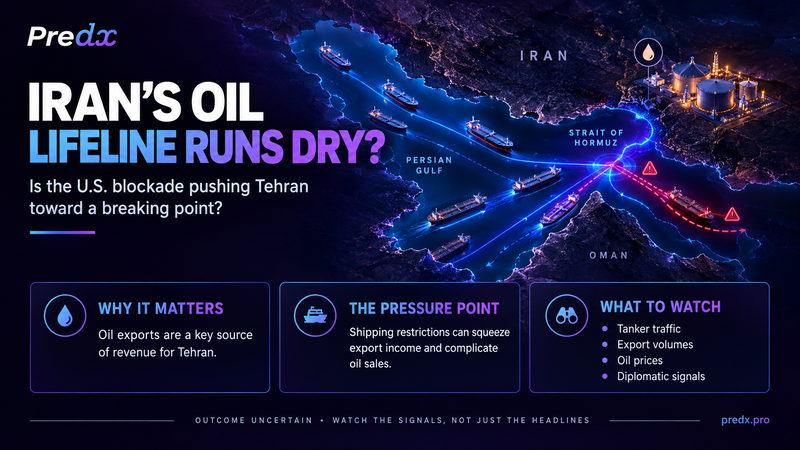

Iran has lost one of its most important financial lifelines—and the consequences could reach far beyond its borders.
For months, Tehran relied on a hidden network of oil tankers stationed in Asian waters to sell crude to Chinese buyers and bring in billions of dollars. The system helped Iran keep oil revenues flowing despite war and restrictions on its exports.
But that buffer has now run out. According to oil-market analysts at Kpler, Iran’s offshore crude reserves were fully depleted by mid-October 2026 as a renewed U.S. naval blockade prevented fresh shipments from replacing the oil already sold.
The development marks a major setback for Tehran. With its floating oil stockpile exhausted, the pressure is shifting from a shipping problem to a much bigger economic question: Can Iran sustain its finances if its oil revenue remains cut off?
The Shadow Fleet: Iran’s Financial Lifeline
Iran spent years developing ways to move oil despite U.S. sanctions. Tankers linked to its oil trade transported crude to waters near Malaysia and Singapore, where cargoes could be transferred between vessels before reaching Chinese refineries.
This offshore storage gave Tehran a valuable advantage. Even when new exports became difficult, Iran could continue selling oil that was already outside the Persian Gulf.
That cushion has now disappeared. Kpler data indicate that Iran’s floating reserves, which had climbed to nearly 90 million barrels after the blockade was temporarily lifted in June, fell to less than 1 million barrels by October 5 before being exhausted.
The loss threatens a major source of government income and foreign currency. Although payments for earlier shipments may still arrive, those funds cannot replace a steady flow of new oil sales indefinitely.
What Happens When Iran’s Oil Money Disappears?
The economic consequences could deepen an already difficult situation for Iran.
Oil revenue provides foreign currency that helps the government finance spending and support imports. When those earnings fall, pressure can build on the national currency, consumer prices, and the government's ability to fund essential operations.
Iran may still have alternative ways to move oil, including overland transportation and storage inside the country. However, analysts say these options are unlikely to replace the volumes previously transported by sea.
Meanwhile, China—the main destination for Iranian crude—can seek supplies from other producers. Reports indicate that some Chinese refineries are increasingly turning to alternatives, including oil from Brazil and West Africa. This could make it harder for Tehran to regain its former market position, even if shipping restrictions eventually ease.
Yet an economic squeeze does not automatically mean political collapse. Iran has demonstrated an ability to withstand prolonged pressure, and the government's response will be just as important as the financial damage itself.
Could the Blockade Change the Course of the Conflict?
The central question is whether mounting economic pressure will push Tehran toward negotiations—or encourage it to take a harder line.
Three developments could shape what happens next:
Diplomatic negotiations: Any sign of progress toward an agreement could change expectations about the duration of the blockade.
Oil shipping activity: Evidence of renewed exports or alternative supply routes could indicate whether Iran is finding ways to restore revenue.
Global oil prices: Changes in regional supply, shipping risks, and demand could influence energy markets far beyond the Middle East.
For prediction-market observers, these developments offer measurable signals to follow. But the outcome remains uncertain: economic pressure may encourage compromise, yet it could also prolong tensions or trigger further escalation.
Final Remarks: The Oil Is Gone, but the Story Is Far From Over
Iran's depleted offshore oil reserves represent a significant turning point in the economic pressure campaign. A system that once helped Tehran maintain cash flow despite restrictions has lost its ability to provide a reliable supply of crude to buyers abroad.
The next chapter will depend on whether the blockade continues, whether Iran finds alternative ways to export oil, and whether economic pressure translates into diplomatic concessions.
The biggest question is no longer just how much oil Iran has left at sea—it is what Tehran will do next.
Follow the signals with PredX. From oil-market shifts and geopolitical tensions to major global events, it gives you a place to explore what could happen next. Research the developments, compare expectations, and test your judgment against changing market sentiment.
👉 Visit https://predx.pro/ and explore the prediction markets shaping tomorrow's headlines. Don't just follow the news—think ahead, weigh the possibilities, and forecast what comes next.

Comments
No comments yet. Be the first to comment!