Gold at a Crossroads: Fed Tightening Bets Put the Metal Under Pressure
A Quiet Gold Market Could Be Hiding a Bigger Move
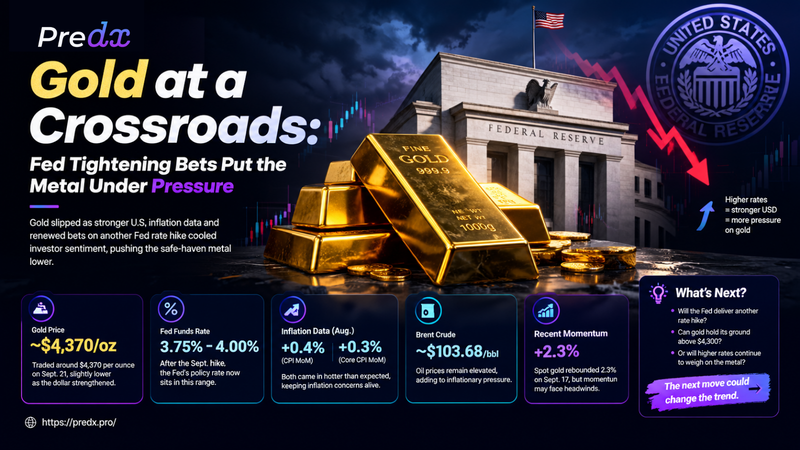

Gold is entering another tense stretch as investors reassess whether the Federal Reserve will keep monetary policy tighter for longer. On Thursday, September 24, spot gold was little changed around $4,282 an ounce, after falling more than 1% the previous day as hawkish Fed signals strengthened expectations for additional rate increases.
The Fed Is Changing the Gold Conversation
The pressure on gold is not simply about what the Fed has already done—it is increasingly about what comes next.
The Fed raised its policy rate by 25 basis points on September 16 to a 3.75%–4.00% target range, while inflation remains above its 2% objective. Recent comments from Fed officials have reinforced concerns that policymakers could favor additional tightening if inflationary pressures remain persistent.
That has strengthened the U.S. dollar and pushed investors toward interest-bearing assets, creating a tougher environment for gold, which does not generate interest income. Reuters reported that the dollar reached a two-month high on Wednesday as hawkish Fed commentary pressured bullion.
But Gold Still Has Another Story to Tell
The gold market is being pulled in two directions.
Higher rates and a stronger dollar can weigh on bullion, but inflation concerns, geopolitical uncertainty and safe-haven demand can provide support. The World Gold Council has described gold as caught between near-term monetary-policy pressure and broader economic and market risks.
That creates a market where every new inflation reading, oil-price move, or Fed comment could quickly shift expectations.
For traders and prediction-market participants, the interesting question is therefore bigger than simply “Will gold rise or fall?”
It is about which force wins next: tighter monetary policy or renewed demand for gold as a hedge against uncertainty?
The Next Move Could Come From the Data
Markets will be watching upcoming economic indicators and Fed communication closely. Stronger inflation or economic activity could reinforce expectations for further tightening, while evidence of slowing growth or easing price pressures could change the policy narrative.
Recent trading has already shown how quickly sentiment can move. Gold has remained within a relatively narrow range around the $4,300–$4,400 area in recent sessions before Wednesday's decline, according to market analysis cited by Reuters.
That uncertainty is exactly what makes gold an intriguing prediction-market subject.
Turn Market Uncertainty Into a Forecast
Gold's next move won't be decided by one headline. It will be shaped by inflation, interest rates, the dollar, economic data, and investor expectations—all colliding in real time.
That is where PredX comes in.
PredX gives you a place to turn your market outlook into a forecast and explore questions surrounding major financial and global events. Instead of simply watching headlines unfold, make your view part of the prediction.
The market is moving. The question is: what do you think happens next?

Comments
No comments yet. Be the first to comment!