Diesel for Diplomacy: Can Trump’s Russia Deal Finally Unlock Ukraine Peace Talks?
Washington is betting that energy cooperation could bring Moscow back to the negotiating table—but critics warn the deal may give Russia leverage without securing peace.
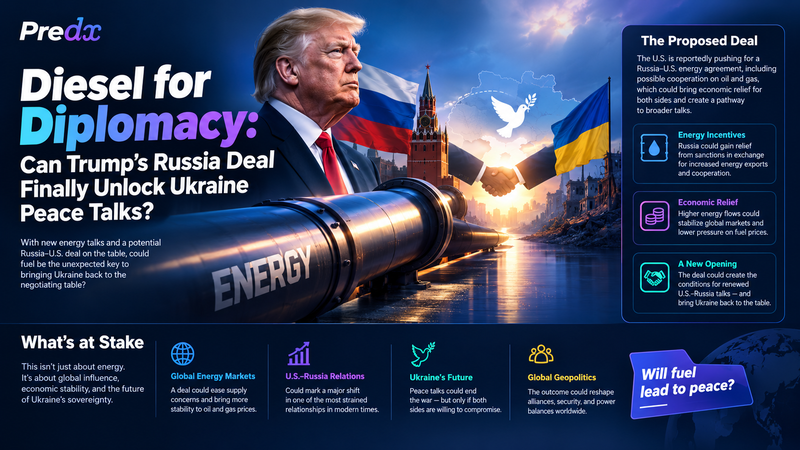

Could a shipment of diesel fuel help change the course of a war?
The Trump administration appears to be testing that possibility. U.S. envoys have told Ukrainian officials that an agreement allowing Russian diesel exports could help soften Moscow’s position and revive stalled negotiations to end the war in Ukraine, according to people familiar with the discussions.
The strategy represents a delicate balancing act: Washington wants to encourage Russia to negotiate while addressing high fuel prices at home. But easing restrictions on Russian energy exports also raises concerns that Moscow could benefit financially without making meaningful concessions.
The big question is whether fuel can open the door to peace—or simply give the Kremlin another advantage.
Why Diesel Is Suddenly Part of the Peace Strategy
According to Reuters reporting published October 12, U.S. Middle East envoy Steve Witkoff and Jared Kushner discussed the proposal with Ukrainian officials during a meeting in Miami.
The U.S. representatives reportedly acknowledged that Russian President Vladimir Putin was not ready to negotiate an end to the war, but argued that the diesel agreement could help restart trilateral discussions involving Washington, Moscow, and Kyiv.
President Donald Trump announced the arrangement on October 9, saying Russia would supply diesel to U.S. and global markets. His administration also temporarily lifted sanctions on Russian fuel.
The move has two potential objectives: increase available fuel supplies and create an opening for renewed diplomatic engagement.
However, Ukraine has not agreed to the proposal outright. The arrangement remains politically sensitive, particularly because sanctions were intended to restrict Moscow’s revenue following its invasion of Ukraine.
The Risk: Russia Could Gain Without Giving Much Back
The agreement has sparked questions about whether the potential diplomatic benefits justify easing economic pressure on Moscow.
For Russia, renewed access to export markets could generate additional revenue for its energy sector. Critics fear that relaxing restrictions before securing concrete commitments could weaken Washington’s negotiating leverage.
There is also uncertainty about the deal’s impact on fuel prices. Although additional diesel supplies could offer some relief, analysts have questioned whether the announced volumes would be large enough to meaningfully lower prices.
Meanwhile, Ukraine has signaled openness to an energy ceasefire if Russia also halts attacks on Ukrainian energy infrastructure. But Kyiv has raised concerns about the terms of the arrangement, and reports of continued attacks underscore how difficult it may be to secure reciprocal commitments.
The central challenge is straightforward: economic cooperation may encourage dialogue, but it does not guarantee peace.
What This Means for Prediction Markets
For prediction-market participants, this story is about more than oil. It brings together diplomacy, sanctions, energy supply, and the possibility of a ceasefire.
Three developments could influence how expectations change:
Peace negotiations: Will the U.S. initiative lead to renewed trilateral talks or another diplomatic dead end?
Sanctions and energy exports: Will restrictions remain relaxed, and will Russia deliver the announced fuel volumes?
A potential energy ceasefire: Will Moscow and Kyiv agree to stop targeting each other’s energy infrastructure?
Each development could reshape expectations surrounding the war, global energy markets, and relations between Washington and Moscow. But announcements should be distinguished from confirmed outcomes, and market probabilities should not be treated as guarantees.
Final Takeaway: A Fuel Deal Is Not Yet a Peace Deal
Washington is attempting a high-stakes diplomatic calculation: offer a path toward energy cooperation and hope Moscow responds with greater willingness to negotiate.
If the strategy succeeds, it could help restart discussions that have struggled to gain traction. If it fails, Russia could benefit from renewed export opportunities while the war continues.
For now, the outcome remains uncertain—and the next diplomatic moves may matter more than the initial announcement.
🔥 Follow the story beyond the headlines with PredX.
Will this diesel deal bring Russia closer to peace talks, or will negotiations stall again? Explore prediction markets on PredX to track how expectations shift as new developments emerge across geopolitics, energy, and world events.
👉 Visit https://predx.pro/, research the possibilities, weigh the evidence, and make your forecast. Don't just watch history unfold—understand the outcomes the world is watching.
This article is for informational purposes only and is not financial advice.

Comments
No comments yet. Be the first to comment!